
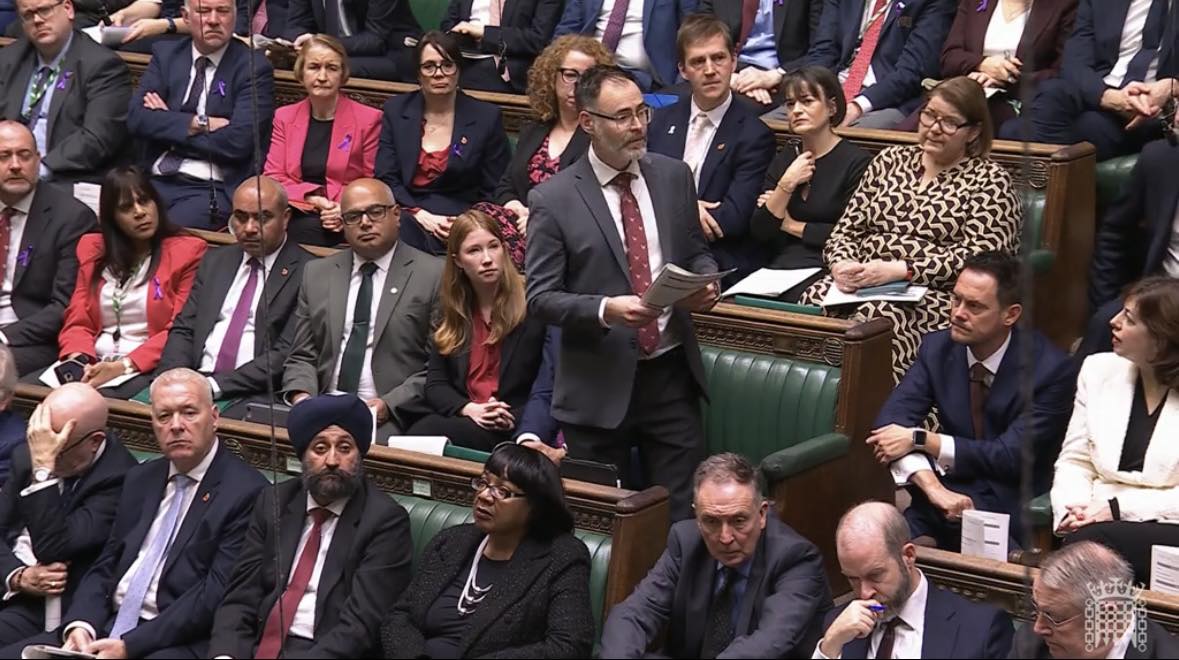
Richard Quigley, MP for Isle of Wight West, today used Prime Minister’s Questions to highlight the urgent case of a patient, who has been placed on an end-of-life care pathway following a recent Court of Protection ruling. This decision was made despite national guidance and ministerial statements confirming that anorexia is not considered a terminal illness.
Mr Quigley told the Prime Minister:
“Two weeks ago, an anorexia patient, who is suffering from anorexia, was placed on an end-of-life care pathway after Rotherham Doncaster and South Humber NHS Foundation Trust obtained a Court of Protection ruling to withdraw her treatment. This decision directly contradicts NICE guidelines and the Minister for Care’s own statement in September that eating disorders are not terminal illnesses. Will the Prime Minister urgently review this case to ensure that she and her family receive the support they need, and that she is given every possible chance to recover and live?”
Richard’s intervention follows his ongoing work with the All-Party Parliamentary Group on Eating Disorders and his contributions to debates on mental health, including his Westminster Hall debate in September on preventing deaths from eating disorders.
During that debate, the Minister for Care, Stephen Kinnock MP, stated:
“Reports of people with eating disorders being offered end-of-life care are deeply troubling. The Royal College of Psychiatrists has been crystal clear that eating disorders are not terminal illnesses. It has updated its guidance to re-emphasise that important point, so that no person, nor their loved ones, should ever feel that treatment has reached a point of no return.”
In response today, the Prime Minister praised Mr Quigley’s work as a ‘powerful advocate for change’ and confirmed that he would instruct Ministers in the Department of Health and Social Care to urgently review the patient’s case and ensure that ‘everyone with eating disorders gets the help and support they need’.


